
5 Signs Your Commercial Property Needs Professional Pressure Washing
Your commercial property is basically your business card to the world. That’s not some fancy marketing speak — it’s reality. After running a small retail chain for fifteen years, I’ve learned that first impressions stick harder than chewing gum on summer pavement. And nothing screams “unprofessional” quite like a grimy, stained building facade that looks like it hasn’t seen proper maintenance since the Blair administration.
But here’s the thing: most property owners wait until their buildings look absolutely dreadful before calling in the professionals. I used to be one of them, thinking I could handle everything with a garden hose & some elbow grease. Spoiler alert: I couldn’t.
Professional pressure washing isn’t just about aesthetics (though that matters more than you might think). It’s about protecting your investment, maintaining property values, and ensuring your business doesn’t accidentally communicate the wrong message to potential customers or tenants.
Stubborn Stains That Won’t Budge
You know those mysterious dark patches that seem to appear overnight on your building’s exterior? The ones that make you wonder if someone’s been conducting secret experiments against your walls? Those are your first red flag.
I remember staring at a particularly stubborn oil stain on our loading bay wall for months. Tried everything from household cleaners to industrial degreasers. The bloody thing just sat there, mocking my efforts like some sort of petroleum-based graffiti. Turns out, some stains require the kind of pressure & specialized equipment that only professionals possess.
Organic stains from algae, mould, or mildew are particularly notorious. They don’t just look unsightly — they can actually damage your building materials over time. Concrete, brick, and stone are porous materials that absorb these contaminants, and once they’re embedded deep enough, your weekend warrior cleaning attempts become about as effective as trying to empty the Thames with a teaspoon.
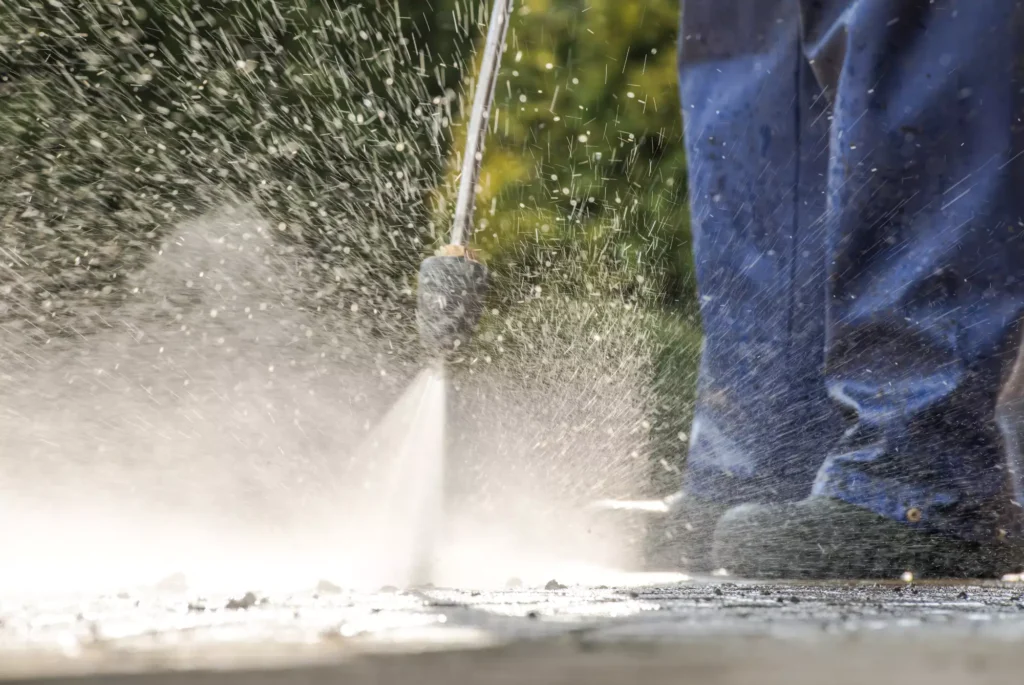
Professional pressure washing systems can generate anywhere from 1,500 to 4,000 PSI (pounds per square inch). Compare that to your garden hose’s measly 40-60 PSI, and you’ll understand why some stains laugh at your DIY efforts.
Visible Dirt Buildup & Discolouration
Sometimes the decline happens so gradually that you don’t notice it. Like watching your children grow — one day they’re toddlers, next thing you know they’re asking for car keys.
Your building’s exterior accumulates dirt, dust, exhaust fumes, and general urban grime at an alarming rate. In busy commercial areas, this buildup can be substantial within just a few months. What starts as a barely noticeable film eventually transforms your once-pristine white walls into something resembling tired old newspaper.
The psychological impact on customers is real. Studies show that people unconsciously associate dirty buildings with poor business practices. Whether that’s fair or not is debatable, but consumer psychology rarely concerns itself with fairness. A discoloured facade can signal neglect, lack of attention to detail, or worse — financial difficulties.
I’ve seen businesses lose potential customers before they even walked through the door. The human brain makes split-second judgements, and a grimy exterior can trigger negative associations faster than you can say “quarterly cleaning budget.”
Mould & Mildew Growth
Britain’s climate is practically designed for mould cultivation. Our persistent dampness creates perfect breeding conditions for these unwelcome organisms, and they’re not picky about where they set up shop.
Mould & mildew aren’t just cosmetic issues — they’re health hazards. These fungi release spores into the air, potentially triggering respiratory problems, allergic reactions, and other health complications for employees and visitors. From a legal standpoint, allowing mould growth could expose you to liability claims, particularly if someone develops health issues that can be traced back to your property.
The tricky bit about mould is that surface cleaning often isn’t enough. You might scrub away the visible growth, but the root system can remain embedded in porous surfaces. Professional pressure washing combines high-pressure water with specialized cleaning solutions that actually kill mould at its source, not just remove the visible symptoms.
Plus, let’s be honest — mould looks absolutely dreadful. Those black, green, or brown patches spreading across your building exterior send a clear message that maintenance has been neglected. It’s like wearing a stained shirt to an important meeting; technically functional, but definitely not the impression you want to make.
Decreased Kerb Appeal
This one’s subjective, but you’ll know it when you see it. Or rather, when you suddenly start noticing how shabby your property looks compared to neighbouring buildings.
Kerb appeal affects everything from customer foot traffic to property valuations. I’ve watched retail businesses struggle because their storefronts looked tired and uninviting, even though their products & services were excellent. Meanwhile, their fresher-looking competitors down the street attracted customers like magnets.
For commercial properties, kerb appeal directly impacts rental rates and tenant quality. Prospective tenants — especially those in customer-facing businesses — are acutely aware that their success depends partly on their location’s visual appeal. A property that looks well-maintained commands higher rents and attracts more reliable tenants.
The compound effect is real. When one building on a street looks exceptional, it makes neighbouring properties appear shabby by comparison. This isn’t about keeping up with the Joneses; it’s about maintaining competitive positioning in your local market.
Sometimes the change happens gradually enough that you become blind to it. Fresh eyes (like potential customers or tenants) will notice immediately what you’ve unconsciously learned to ignore.
Slip Hazards & Safety Concerns
Algae growth on walkways, entrance areas, and car parks creates genuinely dangerous conditions. That green, slimy coating might look harmless, but it’s basically nature’s version of a skating rink.
Health & safety regulations require commercial property owners to maintain safe conditions for employees, customers, and visitors. Slippery surfaces covered in organic growth represent a clear liability risk. If someone takes a tumble on your property because you failed to address obvious hazards, your insurance company won’t be thrilled about covering the resulting claims.
I’ve seen car park surfaces become so slick with algae & accumulated grime that they were genuinely treacherous in wet conditions. The liability exposure was enormous, but more importantly, the safety risk to people using the facility was unacceptable.
Professional pressure washing doesn’t just clean these surfaces — it removes the organic matter that creates slip hazards in the first place. The high-pressure cleaning process effectively strips away algae, mould, and accumulated dirt that can make surfaces dangerously slippery, particularly when wet.
Regular maintenance also helps identify potential structural issues before they become serious problems. Cracked pavement or damaged surfaces are much more visible once they’re properly cleaned.
Tenant Complaints & Maintenance Requests
When tenants start complaining about the building’s appearance, you’ve probably waited too long. These are people who see your property every single day — if they’re bothered enough to actually mention cleanliness issues, the situation has likely progressed beyond minor concerns.
Tenant satisfaction directly impacts retention rates, and replacing tenants is expensive. Marketing vacant spaces, conducting viewings, processing applications, and managing turnover consumes significant time & resources. Preventive maintenance through regular pressure washing is considerably more cost-effective than dealing with vacancy periods.
Smart tenants understand that their business success depends partly on their location’s professional appearance. They’re not being difficult when they request exterior cleaning — they’re protecting their own commercial interests. A shabby building reflects poorly on every business operating within it.
From a landlord’s perspective, maintaining high standards helps justify premium rental rates. Tenants are willing to pay more for properties that enhance rather than detract from their professional image.
Sometimes tenant complaints reveal issues you haven’t noticed from street level. Different vantage points expose different problems, and tenants might spot developing issues before they become obvious to property owners who only view the building externally.
When DIY Efforts Fall Short
There’s nothing inherently wrong with attempting some basic exterior cleaning yourself. I’m all for hands-on property management when it makes sense. But recognizing your limitations isn’t defeat — it’s smart business.
Domestic pressure washers & basic cleaning supplies have their place, but commercial properties face different challenges than residential homes. Higher traffic volumes, more complex staining, and greater exposure to pollutants require commercial-grade equipment & expertise.
Professional pressure washing companies possess specialized knowledge about different building materials, appropriate pressure settings, and effective cleaning solutions. They understand which surfaces can handle high pressure & which require gentler approaches. This expertise prevents costly damage that inexperienced cleaning attempts might cause.
The time factor matters too. Properly cleaning a commercial building’s exterior is labour-intensive work. Unless you enjoy spending entire weekends scrubbing walls & pavements, professional services often represent better value when you factor in your time’s worth.
Insurance considerations come into play as well. Professional cleaning companies carry liability coverage for their work. If DIY cleaning efforts cause property damage or create safety hazards, your insurance might not provide coverage for resulting claims.
The Bottom Line
Professional pressure washing isn’t an unnecessary luxury — it’s fundamental property maintenance that protects your investment while projecting the right image to customers, tenants, and the general public.
The signs we’ve discussed often appear gradually, making them easy to overlook until they become obvious problems. Regular professional cleaning prevents minor issues from developing into major headaches that cost significantly more to address.
Your commercial property works hard for your business. Returning that favour with proper maintenance ensures it continues performing at its best for years to come. Sometimes the best investment decisions are the ones that prevent problems rather than solve them.